Call Monday-Friday 9am - 5pm Closed Weekends & Bank Holidays




[ Contact Us ]
Need Help? Calling from a mobile please call 0151 647 7556
0800 195 4926Do you have a question? or need help?
Call Monday-Friday 9am - 5pm Closed Weekends & Bank Holidays,
The UK has had a long and complicated relationship with potholes. Most British motorists will, at some point, have experienced the impact of poor road surfaces, whether that is damage to tyres, alloy wheels, suspension or steering alignment.
Potholes have always been a problem on local roads, but in recent years the issue has become harder to ignore. Drivers are facing higher repair costs, councils are under pressure to maintain ageing road networks, and modern vehicles are becoming more expensive to repair when damage does occur.
There are about two million potholes filled in on UK roads each year, costing local councils millions of pounds to repair. 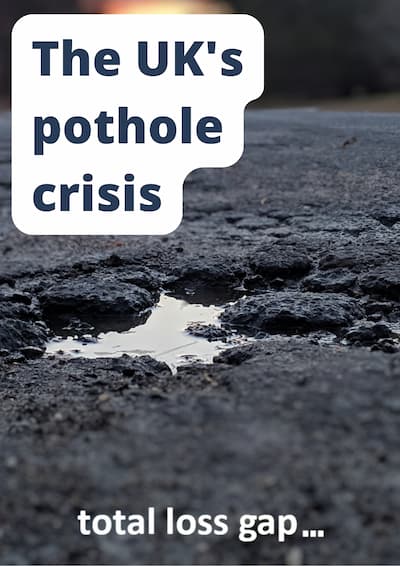
Despite years of promises around road investment and repairs, the UK's pothole problem continues to affect drivers in 2026. Recent reports suggest pothole-related breakdowns have surged again following wet weather and continued pressure on local authority maintenance budgets.
Modern vehicles are also becoming more vulnerable to pothole damage. Larger alloy wheels, lower-profile tyres and heavier electric vehicles can all increase the likelihood and severity of tyre, wheel and suspension damage after striking poor road surfaces.
For many motorists, pothole damage is no longer just an inconvenience. Repair bills involving cracked alloy wheels, damaged tyres and suspension components can now run into hundreds, or even thousands, of pounds.
The problem is that, despite the best efforts of councils to fill potholes, they keep coming back. There are estimated to be hundreds of thousands of potholes needing attention at any one time. It is not just potholes themselves that cause concern, but the wider condition of many local roads.
According to the Asphalt Industry Alliance (AIA), the backlog of essential carriageway repairs needed to bring UK road surfaces up to standard has previously been estimated at more than £12 billion.
The AIA's annual ALARM survey has repeatedly highlighted the same underlying issue: local authorities are often forced to use limited road maintenance budgets for short-term patch repairs, rather than longer-term resurfacing work that could prevent potholes returning.
This can have a knock-on effect for motorists and businesses. Poor road surfaces can cause avoidable damage to vehicles, increase repair bills and add further pressure to household motoring costs.
The 2022 ALARM survey highlighted the scale of the UK's road maintenance backlog. According to the report, councils would require around an additional £1 billion every year simply to maintain roads to their own target standards.
The survey also estimated that more than 37,000 miles of local roads could require maintenance work within five years. Meanwhile, potholes were reportedly being filled at a rate of one every 19 seconds, while roads were only being resurfaced on average every 70 years.
Pothole-related breakdowns have been a growing concern for many years. RAC patrols attended more than 10,000 pothole-related breakdowns in 2021, which was reported as a three-year high at the time.
The most common types of damage include broken suspension springs, damaged shock absorbers, distorted wheels and tyre damage. These are not always minor repairs, especially on vehicles fitted with larger wheels or specialist tyres.
For drivers, the real frustration is that pothole damage can happen suddenly and without warning. A single impact can leave a tyre unsafe, crack an alloy wheel or knock suspension geometry out of alignment.
The UK's pothole problem has several causes. One of the biggest is the age and condition of the road network. Many local roads were not built to cope with today's traffic volumes, vehicle weights and weather extremes.
Weather also plays a major role. Potholes are often caused when water enters small cracks in the road surface. When temperatures drop, that water can freeze and expand, forcing the cracks open. As traffic passes over the weakened surface, the road begins to break apart.
Heavy rainfall can make matters worse by washing out weakened sections of road and making existing defects harder to spot. Freeze-thaw cycles, wet winters and heavier traffic all contribute to the same problem.
Councils are also under pressure to manage limited maintenance budgets. As a result, many authorities have to prioritise urgent repairs rather than full resurfacing schemes. This can mean potholes are patched temporarily, only to return later.
Electric vehicles are often significantly heavier than petrol or diesel cars because of the weight of their battery packs. Combined with increasingly large alloy wheels and lower-profile tyres, this can leave some EVs more exposed to pothole-related damage.
The additional weight placed through the suspension and wheels can increase the force generated when a vehicle strikes a damaged road surface. This may lead to cracked alloy wheels, tyre sidewall damage, suspension alignment issues and higher repair costs.
Many EVs also use specialist tyres designed to support heavier loads and improve efficiency. These tyres can be more expensive to replace, making pothole damage particularly frustrating for electric vehicle owners.
Repair costs linked to pothole damage have risen sharply in recent years. Modern alloy wheels, larger tyre sizes and advanced suspension systems mean even relatively minor impacts can become expensive repairs.
Diamond-cut alloy wheel refurbishment can often cost well over £100 per wheel, while larger low-profile tyres may cost several hundred pounds to replace. If suspension components or wheel alignment are affected, the bill can rise further.
Some modern vehicles also rely on advanced driver assistance systems, sensors and calibrated safety technology. Where suspension or alignment work is needed, further checks or recalibration may be required.
Drivers can attempt to claim compensation from their local council if pothole damage has occurred because of poor road maintenance. However, these claims are not always straightforward.
Councils may reject a claim if they can show that they were not aware of the pothole, or that they had followed a reasonable inspection and maintenance process. This is often linked to Section 58 of the Highways Act, which can allow councils to defend claims where they can show they took reasonable care.
If you suffer pothole damage, it can help to photograph the pothole, photograph the vehicle damage, record the exact location, keep repair invoices and report the pothole to the relevant authority as soon as possible.
Even where a claim is valid, the process can take time. For some drivers, this means paying for repairs first and then trying to recover the cost afterwards.
Long-term improvement will depend on sustained investment in road maintenance, not just emergency patch repairs. Preventative maintenance is usually more effective than waiting for roads to fail and then trying to repair the damage afterwards.
Local authorities also need enough funding and certainty to plan resurfacing programmes properly. Short-term repairs may be unavoidable, but they do not always address the underlying condition of the road.
Drivers can also help by reporting potholes when they appear. The more accurately defects are reported, the harder they are to ignore. Reporting a pothole also creates a record, which may be important if someone later suffers damage at the same location.
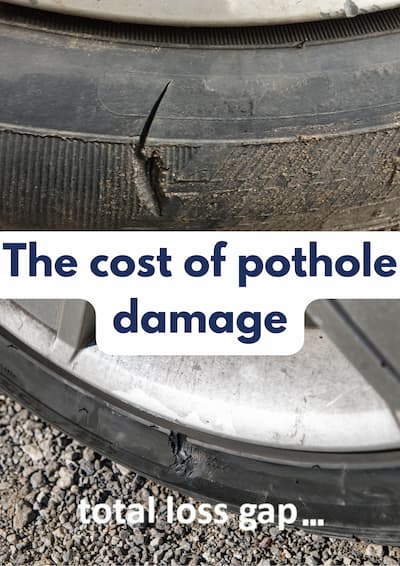
Suffering damage to your alloy wheels or tyres when you hit a pothole is becoming ever more common.
You can try to claim from your local council for damage suffered due to the condition of the road. You may also be able to claim from your motor insurance, depending on the circumstances and the cover you hold.
As pothole-related repair costs continue to rise, many drivers are exploring ways to help manage unexpected tyre and alloy wheel damage without relying solely on council compensation claims or motor insurance.
Alloy Wheel Insurance can cover the cost of alloy wheel repairs following accidental damage.
Tyre Insurance can cover the cost of tyre repair or replacement following accidental damage.
Tyre & Alloy Wheel Insurance combines cover for both tyres and alloy wheels against the cost of repairs and replacement.
Tyre and Alloy Wheel Maintenance Plan is a non-insured maintenance package designed to help manage the condition and cost of tyres and alloy wheels.
GAP Insurance may seem extreme in the context of pothole damage, but severe road impact damage can occasionally contribute to a vehicle being written off. GAP Insurance can help cover a shortfall on a finance agreement or lease, or help return you to the original price paid or replacement cost, depending on the type of GAP cover selected.
See our Tyre Protection Hub for a detailed set of answers on tyre damage, protection options and related motoring costs.
Drivers can help by reporting potholes to their local council or highway authority. This helps create a record of the defect and may also help councils prioritise repairs.
You can also support campaigns calling for better investment in road maintenance and share information about dangerous road defects with other local drivers. Poor road surfaces affect motorists, cyclists, pedestrians and businesses, so awareness still matters.
Britain's pothole problem shows little sign of disappearing any time soon. As vehicles become more expensive to repair and councils continue to face pressure on maintenance budgets, drivers are increasingly being left to deal with the financial consequences of damaged roads.
Whether through council claims, motor insurance or specialist protection products, understanding the risks and costs associated with pothole damage is becoming more important than ever for UK motorists.
Reviewed by Mark Griffiths, founding Director of Aequitas Automotive Ltd, the company behind Total Loss GAP. Updated 18/5/2026