The Most Commonly Stolen Cars in the UK (2025)
Recent data suggests around 54,000 vehicles were stolen across Britain in 2025, equivalent to roughly six cars every hour.
While that figure is slightly lower than the previous year, the long-term trend remains worrying, with theft rates more than doubling since 2015.
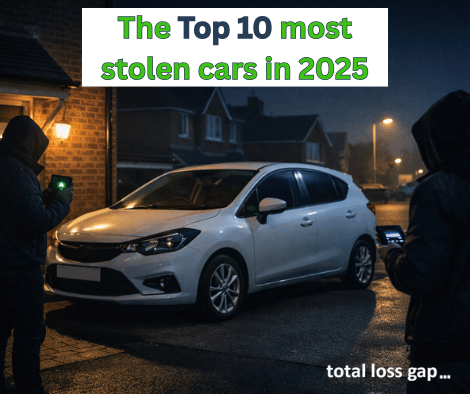
And the vehicles most at risk may surprise you. It isn’t always exotic sports cars or expensive luxury SUVs that thieves target. In many cases, the most commonly stolen models are everyday family cars.
Car theft not only leaves drivers without transport but also puts them at risk. If a stolen vehicle is never recovered, insurers usually settle the claim based on the
car's market value at the time of the theft, rather than what the owner originally paid for it. Because vehicles can depreciate quickly in their early years, drivers may face a financial shortfall when replacing their car. This is one of the situations where
GAP Insurance is often used, as
it can cover the difference between the insurer’s settlement and the original purchase price.
Here are the vehicles that thieves are most likely to target on UK roads today.
The 10 Most Stolen Cars in the UK
| 1 |
Ford Fiesta |
3,511 |
| 2 |
Volkswagen Golf |
1,625 |
| 3 |
Ford Focus |
1,474 |
| 4 |
Toyota RAV4 |
1,319 |
| 5 |
BMW 3 Series |
1,249 |
| 6 |
Nissan Juke |
1,200 |
| 7 |
Toyota C-HR |
967 |
| 8 |
Lexus NX |
951 |
| 9 |
Range Rover Evoque |
895 |
| 10 |
Vauxhall Corsa |
874 |
These figures show how dominant a few models are in vehicle theft. The Ford Fiesta accounted for more than twice as many thefts as the next-most-targeted car, the Volkswagen Golf.
Why Everyday Cars Are Often the Most Stolen
One of the biggest myths about car theft is that criminals only target expensive vehicles. In reality, the opposite is often true.
Cars like the Ford Fiesta, Volkswagen Golf and Ford Focus appear at the top of theft rankings largely because they are among the most common cars on British roads.
There are several reasons thieves favour these models:
1. Sheer popularity
The more common a vehicle is, the easier it is to sell or disguise. Stolen cars can be cloned using another vehicle’s identity or broken for parts without raising suspicion.
2. Strong demand for spare parts
Popular hatchbacks generate a thriving black market for components such as engines, gearboxes, headlights and infotainment systems.
3. Older security systems
Many stolen vehicles are older models that lack the latest anti-theft systems.
4. Ease of resale
Popular cars are easier to sell quickly, either domestically or overseas.
As a result, thieves often prefer “ordinary” vehicles that fit into traffic rather than attention-grabbing supercars.
The Rise of SUVs in Theft Statistics
While traditional hatchbacks still dominate the list, recent years have seen a rise in thefts involving SUVs and crossovers.
Models such as the Toyota RAV4, Toyota C-HR, Lexus NX and Range Rover Evoque have all climbed the rankings.
There are two main drivers behind this trend:
High resale value
SUVs command strong prices in the used market and are often exported overseas.
Keyless entry vulnerabilities
Many modern SUVs rely on keyless systems, which can be exploited through so-called “relay attacks” in which thieves intercept the signal from a key fob inside a house.
Some manufacturers, particularly premium brands, have invested heavily in upgrading vehicle security following a rise in theft rates over the past few years.
Which Car Brands Are Targeted Most?
When theft figures are grouped by manufacturer rather than model, a clear pattern emerges.
Recent analysis of DVLA data shows that the three most stolen brands in the UK are:
- Ford
- BMW
- Toyota
These brands appear frequently because they sell large volumes of vehicles in Britain and many of their models remain on the road for years.
What Happens to Stolen Cars?
Many drivers assume stolen vehicles are driven around until they are abandoned.
In reality, organised criminal networks frequently handle the process.
Stolen vehicles are commonly:
• Stripped in illegal “chop shops” for parts
• Cloned and sold with a false identity
• Exported abroad, often to Eastern Europe, Africa or the Middle East
International trade in stolen cars and parts is worth billions of pounds annually, which helps explain why vehicle theft continues as a problem.
What Happens Financially If Your Car Is Stolen?
If a stolen car is not recovered, insurers normally declare it a total loss and settle the claim.
However, many drivers are surprised to learn that motor insurance usually pays the market value of the vehicle at the time it was stolen, not the price originally paid for the car.
Because cars can depreciate quickly, this can leave owners facing a financial shortfall.
For example, a car bought for £30,000 may only be worth £22,000 two years later. If that vehicle is stolen and never recovered, the insurer will typically settle the claim based on that lower market value.
This is one of the situations where GAP Insurance is often used. GAP cover is designed to pay the difference between the insurer’s settlement and the original purchase price, helping drivers replace the vehicle without suffering a financial loss.
The risk is particularly relevant for drivers who have:
- purchased a new or nearly new car
- bought their vehicle using finance
- experienced significant depreciation in the first few years of ownership
With vehicle theft still affecting tens of thousands of drivers every year in the UK, understanding how insurance settlements work can be an important part of protecting yourself financially.
How To Reduce the Risk of Car Theft
Even if you own one of the models on this list, there are practical steps that can reduce the risk.
Simple but effective measures include:
- Using a steering wheel lock
- Storing keyless car keys in a Faraday pouch
- Parking in well-lit or secure areas
- Installing a vehicle tracker
- Updating vehicle security software where available
Visible deterrents can often be enough to persuade thieves to move on to an easier target.
The Bottom Line
The UK’s most stolen cars are rarely the most expensive ones. Instead, the list is dominated by familiar models that are easy to sell, easy to disguise, and extremely common on British roads.
For drivers, the lesson is clear: popularity can be a risk factor.
If your car is one of the most common models in the country, it may also be one of the most attractive targets for thieves.
And as vehicle technology develops, so too do the methods criminals use. Staying one step ahead increasingly means combining modern security features with some old-fashioned common sense.