The depreciation debate: Do EVs lose value quicker than petrol and diesel Cars?
Electric vehicles are commonly praised for their low running costs and environmental benefits. But there is one question that frequently worries buyers in the UK: do electric cars lose their value faster than traditional petrol or diesel vehicles?
Depreciation is one of the biggest costs of car ownership, and for many drivers it matters more than fuel costs or servicing bills. With the rapid rise in electric vehicles over the past few years, the debate over EV resale values has become increasingly important.
The reality is more complicated than many headlines suggest. Electric cars have often depreciated faster than internal combustion vehicles in the UK, particularly in the early years of ownership. However, the reasons behind this trend are complex, and the gap appears to be narrowing as the market matures.
Understanding Car Depreciation
Before comparing powertrains, it is important to know the broader context.
This means that depreciation is usually the single largest cost of owning a car. Even modest differences in residual values can therefore translate into thousands of pounds.
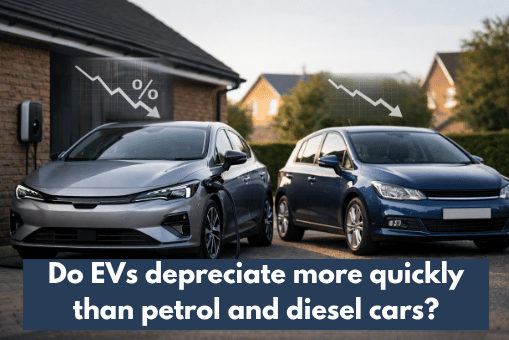
The fear of depreciation, combined with the potential financial issues if the car is written off, is why many motorists consider
GAP Insurance for a new or nearly new car.
Car Depreciation- EV vs Petrol and Diesel Cars
- Petrol cars retain about 52.9% of their original value.
- Diesel vehicles retain around 52.4%
- Plug-in hybrid vehicles retain around 54.3%
- Fully electric cars retain roughly 38.9%
Other industry analysis shows that EVs typically lose 38–42% of their value after three years, compared with 35–40% for petrol and diesel cars. So it is fair to say that some sources see the depreciation difference as much smaller than others do.
These averages mask significant variation across models, but they show why EV depreciation has become a widely discussed topic.
The Biggest Value Drop Often Happens Early
One important detail often overlooked is when depreciation occurs.
Evidence suggests that electric vehicles tend to experience a steeper initial drop in value during the first year of ownership. After that, depreciation patterns tend to become more similar to those of petrol or diesel vehicles.
This front-loaded depreciation has several causes, including pricing changes for new EVs and swift technological development.
Why Electric Car Have Depreciated Faster
Several market forces have influenced EV resale values in the UK.
Fast technological improvement
Electric vehicle technology has evolved quickly over the past decade. New models regularly arrive with:
- longer driving ranges
- faster charging capability
- improved battery efficiency
As a result, earlier models can look outdated sooner than traditional petrol cars. This can affect the value of cars with later tech.
A five-year-old petrol car may still offer broadly similar performance to a new one, whereas a five-year-old EV may have a significantly shorter range than current models.
Falling prices for new EVs
Another factor has been manufacturers' aggressive pricing.
To stimulate demand and meet government electrification targets, carmakers have frequently introduced discounts or reduced list prices. When the price of new cars falls, the used market often adjusts quickly.
Data from the UK market shows that used EV prices have dropped sharply as supply increased and manufacturers discounted new models.
This has added to the perception that electric cars lose value unusually quickly.
A surge in the used EV supply
The used EV market is also changing rapidly.
Large numbers of electric vehicles are now returning to the market as:
- lease agreements end
- salary sacrifice schemes mature
- company fleets refresh their vehicles
This wave of supply has pushed prices down in the short term. Analysts say the influx of three-year-old EVs has significantly expanded the used market and created strong competition between sellers.
Battery concerns for buyers
Although modern EV batteries are designed to last many years, many second-hand buyers are cautious about battery health and replacement costs. This uncertainty may lead to what analysts sometimes describe as a “risk discount” applied to older electric cars in the used market.
Not All EVs Depreciate Quickly
It is important to note that depreciation fluctuates significantly between models.
Residual values depend on factors such as:
- brand reputation
- driving range
- charging speed
- battery warranty
- overall demand in the used market
In fact, some newer EVs are now forecast to retain values similar to petrol vehicles after three years, according to valuation agencies including CAP HPI.
This highlights how quickly the EV market is evolving.
The EV Depreciation Gap Is Narrowing
The story is also changing as the electric vehicle market matures.
Industry analysts now say that while EVs have generally depreciated faster than petrol and diesel cars, the gap between them is beginning to narrow.
A number of factors are driving this shift:
- improving battery reliability
- growing customer confidence in used EVs
- stronger demand for electric vehicles in the second-hand market
Used EV sales in the UK are already rising rapidly, with tens of thousands of models available, often representing huge savings on their cost when new.
For those looking to buy an EV, these opportunities will only continue to grow.
Depreciation Still Matters for Buyers
Whether a car is electric or petrol-powered, depreciation is a key financial consideration. A heavily depreciating vehicle can lead to a number of issues, including:
For this reason, understanding depreciation is important for anyone buying a new or nearly new car. The potential
benefits of GAP Insurance can be used to protect against these concerns.
So, Do Electric Cars Depreciate Faster?
The short answer is yes - on average, electric cars have depreciated slightly faster than petrol and diesel vehicles in the UK, particularly in the first few years of ownership.
However, the difference is not universal and is shrinking as the EV market becomes more established.
In reality, depreciation depends far more on the specific model, brand reputation and purchaser demand than simply whether a car uses electricity or petrol.
For buyers considering a switch to electric, the most important takeaway is that EV depreciation is not set in stone. In a swiftly evolving market, the next generation of electric cars may well prove far more resilient in the used market than the first wave.