Can Tyres Be Repaired or Must They Be Replaced?
Some tyre damage can be safely repaired, while other types require a full replacement.
The key factors are where the damage has occurred and whether the tyre’s internal structure has been affected. While a simple puncture may be repairable, as explained in our guide to
puncture repair costs in the UK, more serious damage can weaken the tyre and make it unsafe to use.
Understanding the difference can help drivers make the right decision quickly and avoid unnecessary risks or costs.
It’s not always obvious at first glance what can be repaired and what can’t.
When a Tyre Can Be Repaired
In certain situations, tyre damage can be repaired safely.
In general, repairs are only considered where:
- the damage is small
- the puncture is located in the central tread area
- the tyre’s internal structure remains intact
- the repair meets recognised safety standards
A typical example is a nail or screw embedded in the tread area of the tyre. In these cases, repairing a tyre puncture can often restore the tyre safely.
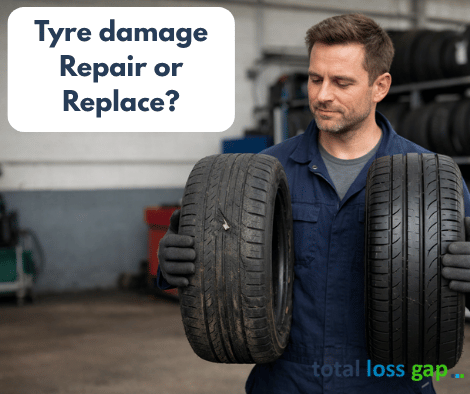
However, even small punctures should always be inspected by a tyre specialist before any repair is carried out.
When a Tyre Must Be Replaced
Not all tyre damage can be repaired.
In many cases, replacement is the only safe option.
A tyre will usually need to be replaced if:
- there is damage to the sidewall, including bulges or cuts
- the internal structure of the tyre has been compromised
- the puncture is too large or located outside the tread area
- the tyre has been driven while significantly underinflated
- the tyre is worn close to or below the legal tread limit
Similarly, some tyres, such as run-flat tyres, are often replaced rather than repaired due to the risk of hidden structural damage. See our guide on
can run-flat tyres be repaired for more details.
In many cases, drivers only realise the extent of the damage once the tyre is properly inspected, as some issues are not always visible from the outside.
Why Some Tyre Damage Cannot Be Repaired
Tyres are made up of multiple layers, including reinforced internal cords that provide strength and stability.
When these internal components are damaged, the tyre may no longer be able to safely support the vehicle, even if the outer rubber appears intact.
Repairs are only suitable when the damage is limited to the tread area and does not affect the tyre’s structural strength.
In most situations, it simply isn’t worth taking the risk if there is any doubt about the tyre’s condition.
Repair vs Replacement: Cost Comparison
The cost difference between repairing and replacing a tyre can be significant.
In most cases, a puncture repair is significantly cheaper than replacing a tyre.
Typical UK tyre costs may include:
- puncture repair: around £20 to £40
- standard tyre replacement: £80 to £150
- premium or larger tyres: £150 to £300+
- run-flat tyres: £250 to £400+
While repairing a tyre is usually the cheaper option, it is only appropriate when the damage is minor and meets safety criteria.
Can You Drive on a Damaged Tyre?
Driving on a damaged tyre is not recommended, even if it seems minor at first.
Even if the damage appears minor, it can worsen over time or lead to sudden failure, particularly after impacts such as those explained in our guide on
how potholes damage tyres.
In some cases, drivers may be able to travel a short distance at low speed to reach a repair centre. However, continuing to drive on a damaged tyre increases the risk of further damage and may make a repair impossible.
How Tyre Type Affects the Decision
The type of tyre fitted to a vehicle can determine whether repair is possible.
Standard tyres are more likely to be repairable when damage is minor and located in the tread area.
Run-flat tyres, on the other hand, are often replaced rather than repaired. This is because they have been designed to remain drivable even after losing pressure.
Driving on a deflated run-flat tyre can cause internal damage that may not be visible.
It is rare for a run-flat tyre to be repaired; therefore, you should budget for a replacement if you get damage to a run-flat.
Performance tyres and low-profile tyres may also be more sensitive to damage and may require replacement in situations where a standard tyre could be repaired.
This is why two tyres that look similar on the surface can be treated very differently by a tyre specialist.
How Drivers Manage Tyre Damage Costs
Tyre damage can occur unexpectedly, particularly on UK roads where potholes and debris are common.
To help manage these costs, some drivers consider:
These options can help reduce the financial impact of unexpected tyre damage, particularly where repairs or replacements are needed. Maintenance plans also include periodic inspections, during which experts can assess the condition of your tyres.
Practical Advice for Drivers
If your tyre is damaged, acting quickly can help prevent further problems.
Drivers should:
- check tyres regularly for visible damage
- have any suspected damage inspected as soon as possible
- avoid driving on a damaged tyre where possible
- follow professional advice on whether repair or replacement is required
If in doubt, it’s always better to have the tyre checked sooner rather than later.
Taking early action can help avoid more serious issues and improve overall safety.
Conclusion
Not all tyre damage is the same. While some minor punctures can be repaired, other types of damage require a full replacement.
The most important factor is whether the tyre’s internal structure has been affected. If it has, repair is not a safe option.
Understanding when a tyre can be repaired and when it must be replaced helps drivers make informed decisions, control costs, and maintain vehicle safety.
When it comes to tyres, acting early is usually the safest option.
Frequently Asked Questions
Can all punctures be repaired?
No. Punctures can only be repaired if they are small, located in the central tread area, and have not damaged the tyre’s internal structure.
Is sidewall damage repairable?
No. Sidewall damage, including bulges or cuts, cannot be repaired safely and usually requires a full tyre replacement. This presents a safety risk, and the tyre should be replaced.
Are run-flat tyres repairable?
Sometimes, but in many cases, they are replaced rather than repaired due to the risk of hidden internal damage.
In reality, damage to a run-flat tyre will require the tyre to be replaced.
Is it cheaper to repair or replace a tyre?
Repairing a tyre is usually cheaper, sometimes significantly. However, it is only possible when the damage is minor and meets safety criteria.
When should I replace a tyre?
A tyre should be replaced if it has structural damage, sidewall issues, or is worn close to or below the legal tread limit.
In the UK, the legal tread limit is 1.6mm across the central three-quarters of the tyre, around its entire circumference
Article reviewed by
Mark Griffiths, Director of Aequitas Automotive Ltd, the company behind Total Loss GAP in the UK, with expertise in GAP insurance and vehicle protection products. (18/4/2026)